Category: Practice&Law

Completing the Qur’an in Tarawih

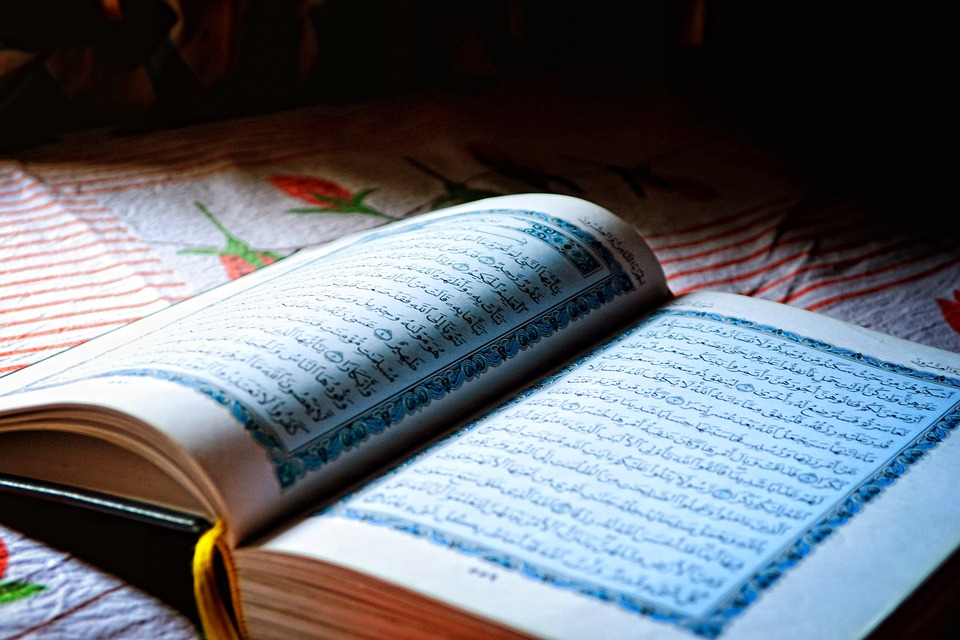
Image of Quran (book)

Completing recitation of the Qur’an at least once in Tarawih can be shown to be recommended (mustahabb). This article discusses the basis for this ruling, and concludes with some practical notes and advice.

[Note: this article does not discuss the preferred number of rak`ah of tarawih, nor the ruling on offering tarawih in jama`ah.]

Ramadan is the month of revelation of the Qur’an [Qur’an, 2:185], and a month for more intensive recitation and study of the Qur’an. The Prophet (may Allah bless him and his Household and grant them peace) used to meet Angel Gabriel (peace be upon him) every night, and they would study the Qur’an [Bukhari]. Another narration tells us that the Prophet (may Allah bless him and his Household and grant them peace) would go over the entire Qur’an with him once every Ramadan, and that in the last Ramadan of the Prophet’s life, they reviewed the entire Qur’an twice [Bukhari, Muslim]. Hence, it is sunnah to recite or listen to the recitation of the entire Qur’an at least once during the month. Imam Ja`far al-Sadiq is reported to have allowed finishing the Qur’an only once a month outside of Ramadan, but once every three days in Ramadan. [Wasa’il].

Recitation does not necessarily have to be in tarawih, although recitation in salah is generally held to be more meritorious than recitation outside of salah.
[This can be supported by the logical reasoning that recitation in salah is necessarily accompanied by additional good deeds: wudu’, ruku`, sujud, etc. A hadith in Mishkat al-Masabih states explicitly that, “Recitation of Qur’an in salah is more virtuous that recitation of Qur’an not in salah”, but its chain of transmision is weak.]
Nevertheless, tarawih itself could be performed even with recitation of short surahs, even every day, if need be. It is reported that Caliph `Ali ibn Abi Talib led the tarawih reciting 5 verses in each rak`ah. [Yahya ibn Hamzah in al-Intisar], which would mean approximately half a juz’ was recited per night.
[Twenty rak`ah were performed each night during Caliph `Ali’s time, as we find in the Musnad of Imam Zayd ibn `Ali and elsewhere].
Rabi`ah, the famous teacher of Imam Malik, observed that in the past, not all the imams of tarawih had memorized the entire Qur’an [Mudawwanah]. Certainly, if there are time constraints, whether on the community (such as during summer tarawih in extremely northern latitudes, where the night is extremely short) or on the individual (who has work commitments, for example, or who is praying alone and has not memorized long surahs), then it is valid to shorten the tarawih recitation in this manner, and the sunnah of finishing the Qur’an could be accomplished outside of salah. In the absence of such constraints, the preference is for prolonged recitation in the optional night prayer.
“Arise [to pray] the night, except for a little – Half of it – or subtract from it a little. Or add to it, and recite the Qur’an with measured recitation. Indeed, We will cast upon you a heavy word. Indeed, the hours of the night are more effective for concurrence [of heart and tongue] and more suitable for words.” [Qur’an, 73:2-6]

There are further textual indications that make a case for completion of the Qur’an in tarawih being a sunnah. We know that in general, throughout the year, the Prophet (may Allah bless him and his Household and grant them peace) used to stand in prolonged prayer by night, to the extent that his feet would become swollen [Bukhari], or torn [Tirmidhi]. The Mother of the Believers, Aishah, was asked about his prayer by night, and she replied that he would offer 8 rak`ah every night – but do not ask about how long and beautiful they were [Bukhari]. There are also narrations that the Prophet (may Allah bless him and his Household and grant them peace) would exert himself even harder in the last ten nights of Ramadan [Muslim], when he might stay awake all night [Bukhari]. Given these descriptions of the Prophet’s (may Allah bless him and his Household and grant them peace) night prayer, we can easily conclude that he must have completed recitation of the Qur’an at least once during the month in his night prayer. In addition to this enacted sunnah of the Prophet, we also find an authentic hadith of verbal encouragement for long recitation in salah.
“Whoever stands [in prayer] with 10 verses will not be written among the negligent. Whoever stands [in prayer] with 100 verses will be written among the devoted. Whoever stands [in prayer] with 1000 verses will be written among those amassing a treasure.” [Narrated by Abu Dawud.]

A narration recorded by Bayhaqi might provide further support for this practice:
“The Messenger of Allah came out one night in Ramadan, and saw people in a corner of the mosque praying, whereupon he asked, “What are these [people] doing?” Someone replied, “O Messenger of Allah, these are people who do not have the Qur’an [memorized], so Ubayy ibn Ka`b is reciting and they are following him in salah.” He said, “They are doing good,” or “They are correct,” and he did not disapprove of that.”
[There is disagreement over the authenticity of this hadith. It was narrated by Abu Dawud, who graded it weak on account of one of its narrators (Muslim ibn Khalid). Al-`Ala’i judged it acceptable (salih) in his fatawa, and Nimawi graded it as good (jayyid) in Athar al-Sunan; vide I`la al-Sunan, 7/69]
If authentic then this indicates that they were praying with the specific aim of hearing the entire Qur’an, for Ubayy had memorized the Qur’an, whereas not all of the other Companions had.

The precedent set by the Prophet (may Allah bless him and his Household and grant them peace) was continued by his Companions and subequent generations after him. In every generation, there are many Muslims who have not memorized large portions of the Qur’an, and who therefore seek to benefit from hearing it being recited by others. Hence, the Companions would gather in small groups in the masjid, each group praying behind a reciter/memorizer. This was the state of affairs that motivated Caliph `Umar ibn al-Khattab to gather people in a single congregation, reviving and institutionalizing the congregational aspect of the prayer that had only been performed on a couple of nights by the Prophet (may Allah bless him and his Household and grant them peace) himself [Bukhari, Malik]. `Umar appointed Ubayy ibn Ka`b to lead the men and (according to one narration) Tamim al-Dari to lead the woman in salah, because they were both memorizers of the Qur’an. The more authentic narrations tell us that the Companions would perform 20 rak`ah every night. Some narrations also point out that the recitation was long, to the extent that people would even tend to support themselves with sticks towards the end, due to the length of standing. [Recorded by Bayhaqi, and authenticated by Nawawi and others] Bayhaqi has also recorded a narration [I have not found discussion of, nor looked into, its authenticity yet] which states that Caliph `Umar summoned three reciters, and had them recite before him. Then, he told the fastest one to recite 30 ayat in each rak`ah, the medium-paced to recite 25 ayat in each rak`ah, and the slowest to recite 20. Even with 20 ayat per rak`ah, and 20 rak`ah, the Qur’an would actually be finished twice over a month. In the face of all of this, it is inevitable that they would be completing recitation of the Qur’an at least once during the month.

`Umar ibn `Abdil-`Aziz told the Taraweh leaders to recite 10 ayat in each rak`ah (which would lead to completion of the Qur’an once over a month) [Mudawwanah]. Imam al-Bukhari used to lead his companions in tarawih reciting 20 ayat in each rak`ah until they completed the Qur’an [Reported by al-Hakim]. Some of the imams of fiqh (Malik and Ahmad) permitted reading from the mushaf in tarawih, even if they did not normally permit it, due to the importance they saw in completing recitation of the Qur’an in tarawih. This emphasis actually can be traced back to the Companions. The wife of the Prophet (may Allah bless him and his Household and grant them peace) Ummul-Mu’mineen Aishah (who would have her servant Dhakwan lead her in tarawih from the mushaf) [Cited by Bukhari as ta`liq]. Imam al-Zuhri of the Tabi`in said, “[Some of] the best of us used to recite from the mushaf [in Ramadan].” These scholars would not have conceded permissibility of reading from the mushaf had completing the recitation of the Qur’an in tarawih not been a sunnah.

In summary then: Ramadan is the month of the Qur’an, the Prophet (may Allah bless him and his Household and grant them peace) would go through the entire Qur’an during Ramadan with Gabriel (peace be upon him), and we also know he would stand in prolonged salah by night. The Companions continued upon his path, and the practice of completing the Qur’an at least once in tarawih every year continued to be handed down through the generations. This practice has played an important role in the oral preservation of the Qur’an.

Practical Notes / Advice

Without detracting from the above strong desirability and importance, we may nevertheless observe that:

1) It is not necessary to complete the Qur’an inside tarawih, so if it is a personal or communal hardship to do so, then the tarawih can be made shorter.

2) Completion of the Qur’an is not the sole aim of tarawih. Some mosques hold ‘marathon’ tarawih sessions in which the Qur’an is completed within the first ten nights or less (3 juz’ per night). This is well and good, but those who attend should not be doing so with the aim of ‘getting the khatm done’ and then neglecting tarawih (or performing it with extremely short recitation) for the rest of the month. Nor should the recitation ever be so fast that the letters and words are not properly pronounced.

Those who complete the tarawih khatm a few nights before the end of Ramadan are encouraged to avoid the temptation to thereafter perform tarawih with only the last 10 surahs each night (especially if they are able to recite other verses). There is no harm in shortening the duration of the tarawih if circumstances call for it, but the sunnah is actually to increase the volume of worship in the last ten nights, in search of Laylat al-Qadr (the Night of Destiny / Value). Even the 27th night of Ramadan, although considered very likely by many scholars is not guaranteed to be Laylat al-Qadr.

And Allah knows best.


Photo credit: Afshad Subair,
Tarawih Alone or In Masjid?

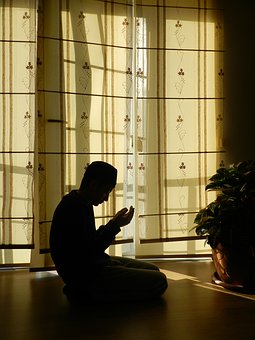
Islamic mosque sunset silhouetteSilhouette of Muslim man praying

Is it ok to pray tarawih alone at home? Is it better to pray it in the masjid?

The short answer is: it depends, but if you do pray it at home, make sure you are not just being lazy. Read on for more.

The Prophet (Allah bless him and his Household) performed tarawih in congregation on two or three nights, and then discontinued the jama`ah for it, out of fear that it might become obligatory. [Narrated by Bukhari and others] Later, in the caliphate of `Umar ibn al-Khattab, `Umar found people performing tarawih in small groups (gathered around individuals who had memorized Qur’an), and thought it a good idea to gather them under a single imam.(We may note that the earlier danger, of the prayer becoming obligatory, had now passed, since after the death of the Prophet, religious rulings could not be changed.) `Umar thus established a single, regular jama`ah for tarawih [Narrated by Bukhari, Malik and others], and this practice was continued by Caliph `Uthman [as narrated by Ibn Sa`d, Malik and others] and Caliph `Ali [as narrated in the Musnad of Imam Zayd ibn `Ali his great-grandson, and by others]. Thus, Sunni scholars in general maintain (and it is a minority view among the Zaydis)  that it is recommended to hold congregational tarawih prayers regularly in Ramadan, as a sunnah of 3 of the 4 Rightly-Guided Caliphs with its basis in Prophetic practice. This has played an important role in the public preservation of the Qur’an, as it has been customary to complete its recitation from memory at least once per Ramadan during these congregational tarawih prayers.


After agreeing on the meritoriousness of a congregation being established for tarawih, the same scholars nevertheless differed (amongst themselves) as to how much it is stressed for every individual to participate in the congregational tarawih. According to the dominant view in the Hanafi school, the jama`ah for tarawih is sunnah `ala al-kifayah, i.e. it is enough (i.e. the sunnah is considered to be fulfilled) if a congregation for tarawih is established in the community [Ibn `Abidin, Radd al-Muhtar], but if a person prays it on his own (at home or elsewhere) he is not considered to be sinful or remiss.


There has been disagreement, since the early generations, about whether it is better for an individual to join the jama`ah for tarawih, or to pray on his own. While there were a number of prominent Sahabah and Tabi`in who are reported to have prayed tarawih in jama`ah, there were others who did not. In Madinah, `Abdullah ibn `Umar, the Sahabi, would pray tarawih on his own, and would advise/give fatwa similarly. After him, Salim (his son) as well as al-Qasim ibn Muhammad ibn Abi Bakr and `Urwah ibn al-Zubayr (two of the Seven Great Jurists of Madinah) similarly would pray tarawih alone. In Kufah, Ibrahim al-Nakha`i, `Alqamah and al-Aswad would each lead their congregations in `Isha’ but then leave and do Tarawih on their own. Ishaq ibn Suwayd relates that there would be a row of people (called saff al-qurra’ – the Reciters’ Row) praying tarawih individually in the mosque while the jama`ah was in progress [See: Ibn Abi Shaybah, Musannaf; Tahawi, Sharh Ma`ani al-Athar].


Two key narrations that relate to this issue are:
1. On one of the nights in which the Prophet led tarawih, someone expressed the desire for him to continue until the end of the night. The Prophet replied, “Whoever stood with the imam until he left, the standing of an [entire] night [of prayer] is written for him.” [Narrated by Tirmidhi (who judged it sahih), Abu Dawud, Nasai, Ibn Majah]


2. After the Prophet had led tarawih on some nights, and people were waiting for him the next night, he did not come out. Rather, he told them thereafter, “I was afraid that the night prayer would be made obligatory for you, and if it were made obligatory you would not [be able to] observe it. So, pray in your homes, for indeed the best prayer of a person is that [he offers] in his home, except for the obligatory prayer [which should be offered in congregation in the mosque].” [Narrated by Bukhari and others]


Scholars disagreed about how to reconcile or prioritize these narrations. The famous Hanafi scholar, Abu Ja`far al-Tahawi, reconciled them by concluding that since the second hadith explicitly says that voluntary prayer offered at home is superior, therefore, in light of the first hadith, we can expect that the one who prays tarawih at home gets more than the reward of praying the entire night.


A man, who was able to recite Qur’an for himself, asked Hasan al-Basri whether to pray tarawih alone or to join the jama`ah. Hasan told him to choose whichever option is better for him, in terms of being more conducive to awareness and a fearful heart [Narrated by Muhammad ibn Nasr al-Marwazi]. This astute reply brings out the fact that for different people, in different circumstances, one or the other option might be better.


Possible Reasons to Favor Praying Tarawih in Jama`ah
  • Benefitting from listening to the recitation of the imam of tarawih, especially for those who have not memorized large portions of the Qur’an themselves.
  • Getting encouragement and motivation from seeing others praying, particularly for someone who might get lazy (and thus not pray at all, or not pray as much) if they were to be alone at home.


Possible Reasons to Favor Praying Tarawih Alone
  • Greater sincerity, and reducing the risk of ostentation (praying to show off)
  • Practicing one’s own recitation
  • (Potentially) earning more spiritual reward by praying for longer, and/or in a later portion of the night
  • (For some people): being able to attend to other important business which they might not be able to do if the tarawih in the masjid lasts a long time. This might include getting enough sleep to be able to function effectively at work, depending on the person’s physical stamina and type of job. It is up to you to be honest with yourself.


It is also worthwhile to bear in mind that praying `Isha’ in jama`ah is (by consensus) more important and meritorious that praying tarawih in jama`ah.
“Whoever prays `isha in jama`ah, it is like standing half the night [in prayer], and whoever prays fajr in jama`ah it is like standing an [entire] night in [prayer].” [Narrated by Ahmad and others]
Of course, this is a general hadith, and should not be used as an excuse not to perform any tarawih/tahajjud prayer. Ramadan is a month where extra worship is strongly encouraged.
“Whoever stands [in extra prayer] in Ramadan, with faith and expectation [of reward], his previous sins are forgiven him.” [Narrated by Bukhari and Muslim]
And Allah knows best.

Photo credits:

Islamic Prayer Times

sundialISLAMIC PRAYER TIMES

By Suheil Laher

“Surely, salah is prescribed upon the believers at fixed times.” [Qur’an, 4:103 ]

The timings of the five daily, obligatory ritual prayers in Islam are determined with reference to natural phenomena easily accessible to everyone; this knowledge is not confined to an elite or exclusive group of people. This connection to the wondrous signs of nature can also help keep the Muslim in tune with the natural world and its changing cycles.

What follows is a summary of the empirical bases for the prayer times, along with some evidence from the sunnah. Hadiths are cited illustratively, not exhaustively. Some prominent scholarly disagreements are also mentioned, without categorically preferring one view over another, but rather to foster awareness and tolerance of such disagreements. I conclude with brief comments on the use of astronomical calculations to find out the prayer times.

1. FAJR
There is agreement that fajr begins when the true dawn appears (the true dawn is that which rises laterally and broad, whereas the false one appears vertically and then disappears), and ends when the sun rises.
“The time for fajr salah is [lasts] long as the first horn of the sun has not risen.” [Muslim] Continue reading “Islamic Prayer Times”

Islamic Rulings on Dissection

dissection-clipart

DISSECTION

By Suheil Laher

(abridged from Dr. Muhammad `Ali al-Barr, al-Tabeeb: Adabuhu wa-Fiqhuhu (The Physician: his Etiquettes and Jurisprudence), co-authored with Dr Zuhayr Ahmad al-Siba`i, Dar al-Qalam / al-Dar al-Shamiyyah, Damascus / Beirut, 1413 / 1993, pp. 165-183.)

  1. Islam considers the human being to be noble, and the human body as subject to respect and sanctity.

“Verily, We have honored the Children of Adam…” [Qur’an, 17:70]

The Prophet has said, “Breaking the bone of a dead person is like breaking it when he is alive.” [Abu Dawud, Ibn Majah, Ahmad, Bayhaqi. Malik (who reported it as a saying of Ummul-Mu’mineen `A’ishah). Sh. Shu`ayb Arna’ut authenticated it (Sharh al-Sunnah (5/393)]

The Prophet also prohibited mutilation. [Bukhari, Tirmidhi, Nasa’I, Abu Dawud, Ahmad, Darimi] Continue reading “Islamic Rulings on Dissection”

Justice : A Taxonomy

View Details

Justice involves putting everything in its appropriate place, and giving each his/her/its due right.

“God commands you that you restore deposits to their owners, and, when you judge between mankind, that you judge justly. How excellent is the teaching that God gives you! Surely, God is All-Hearing, All-Seeing.” [Qur’an 4:58]

“The just ones will be, before God, on pulpits of light….those who are just in their judgment, their families, and what they are in charge of.’ [Muslim]

For convenience, we can subdivide justice into the following categories:

1.      Justice to God

  • Giving thanks

“I hate ingratitude more in a person; than lying, vainness, babbling, drunkenness, or, any taint of vice whose strong corruption inhabits our frail blood.” [Shakespeare, Twelfth Night] Continue reading “Justice : A Taxonomy”

On Justice

Below are some brief notes on Justice in Islam. Neither the list of points, nor the scriptural texts quoted, are intended to be exhaustive. The topic is clearly more vast than to be encompassed in a brief note such as this.

·                     Justice is a central value – if not the central value – in Islam

“Verily, Allah commands justice, kindness and giving to relatives, and prohibits shamefulness, wrong and transgression. He instructs you that you might take heed.” [Qur’an, 16:90]

`Abdullah ibn Mas`ud, the Companion, held this verse to the most comprehensive verse of the Qur’an.

The themes of divine justice, particularly in the Hereafter, and of the imperative for human justice, can be found in a large number of verses.

·                     Justice is also one of the attributes of Allah

“Allah does not do injustice [even to the extent] of an atom’s weight.” [Qur’an, 4:40] Continue reading “On Justice”

Dubious Things (Shubuhat)

summarized from “Mukhtasar Minhaj al-Qasideen

(being al-Maqdisi’s abridgement of Ibn al-Jawzi’s summary of al-Ghazzali’s Ihya’ `Ulum al-Deen“)

“That which is lawful is plain and that which is unlawful is plain and between the two of them are doubtful matters about which not many people know. Thus he who avoids doubtful matters clears himself in regard to his religion and his honor, but he who falls into doubtful matters falls into that which is unlawful, like the shepherd who pastures around a sanctuary, all but grazing therein. Truly every king has a sanctuary, and truly Allah’s sanctuary is His prohibitions. Truly in the body there is a morsel of flesh which, if it be whole, all the body is whole and which, if it be diseased, all of it is diseased. Truly it is the heart.”

[Bukhari and Muslim]

  • The clear halal is that which has no element of haram, such as rain water which is falling on one’s own property.
  • The clear haram is that which has some haram element, be it in substance (such as pork, or eating in gold vessels) or in manner of acquisition (such as riba, or a bribe).
  • The doubtful is that which is between these, and we can discuss it under the following three sections : Continue reading “Dubious Things (Shubuhat)”

On Marriage

Praise be to Allah Who created everything, and ordered it in proportion.
Glory be to Him!  He created and gave order, measured and gave guidance!
Praise be to Allah Who created mankind from a single soul, and created
from it is mate, so that he could incline towards her, and find reassurance,
companionship and intimacy with her.

Allah has created us, and knows us and our nature, needs and capabilities,
and has legislated our religion, to best serve those needs and channel
those capabilities for our benefit.  Islam, as we know, guides not
only our personal life, but also society as a whole.  What we are
going to talk about today, inshaAllah, is a very important aspect of Islam,
which is at the same time the building block of society — marriage. Continue reading “On Marriage”

Mukhtasar al-Quduri

—–

Brief Biography of Imam al-Quduri

He is Abu’l-Hasan Ahmad ibn Muhammad ibn Ahmad ibn
Ja`far ibn Hamdan al-Quduri al-Baghdadi, the Hanafi jurist, born 362 AH.
Al-Quduri is an ascription to the selling of pots (qudur).

Abu’l-Hasan al-Quduri took
his knowledge of fiqh from Abu `Abdillah Muhammad ibn al-Jurjani, from
Abu Bakr al-Razi, from Abu’l-Hasan al-Karkhi, from Abu Sa`id al-Barda`i
from `Ali al-Daqqaq, from Abu Sahl Musa ibn Nasr al-Razi, from Muhammad
ibn al-Hasan al-Shaybani, from Abu Hanifah, from Hammad ibn Abi Sulayman,
from Ibrahim al-Nakha`i, from `Alqamah, from `Abdullah ibn Mas`ud (may
Allah be pleased with him) from the Prophet (may Allah bless him and his
Household and grant them all peace). Continue reading “Mukhtasar al-Quduri”

5-Hajj

PILGRIMAGE (HAJJ)

(According to the Qur’an and Sunnah, as extracted and inferred by scholars of the Hanafi school.)

From “Mukhtasar al-Quduri“,
a matn of Hanafi fiqh, (with some rearrangement). Evidences are generally omitted for brevity.

——————————-

  1. OBLIGATION OF HAJJ
    • Fard Rites in Hajj
    • Wajib Acts in Hajj
  2. THE IHRAM
    • The Mawaqit
    • Entering Ihram
    • Forbidden Deeds during Ihram
    • Permissible Deeds during Ihram
    • Recommended during Ihram
  3. COMPONENTS OF HAJJ (IFRAD)
    • The Tawaf of Arrival
    • The Sa`y
    • Going out to Mina
    • Arafah
    • Muzdalifah
    • Pelting Jamrat al-`Aqabah
    • The Tawaf of Pouring Forth (Ifadah) or Visiting (Ziyarah)
    • Stoning the Jamarat
    • The Tawaf of Farewell (Wida`)
    • Special regulations for women Continue reading “5-Hajj”